Private-label greeting cards give retailers, gift companies and emerging brands an opportunity to create products that belong to their own visual and commercial identity. Instead of selling unrelated generic designs, a buyer can build a coordinated collection around its customers, occasions, price points and sales channels.
Winpsheng is a custom greeting card manufacturer supporting OEM and ODM projects for brands, retailers, wholesalers, importers and gift companies. Private-label programs can cover printed, handmade, 3D pop-up, musical, light-up and other interactive card formats, together with sampling, packaging and scalable production support.
Why Build a Private-Label Card Collection?
A branded collection lets a buyer decide how products look, whom they serve and how they are presented. It can also create clearer differentiation when competing retailers have access to similar generic merchandise.
A recognizable visual identity across multiple products
Designs aligned with the buyer’s customer profile
Control over occasions, formats and price architecture
Brand presentation on cards, envelopes and packaging
Opportunities for exclusive or channel-specific products
A foundation for seasonal extensions and future collections
Define the Role of the Collection
Before creating individual designs, decide what the collection should accomplish. A lifestyle retailer may need a compact everyday range. A gift brand may want premium cards that complement its packaging. An online seller may prioritize visually distinctive formats that photograph well and ship safely.
Who is the end customer?
Which occasions generate demand?
Where will the cards be sold?
What retail prices should the range cover?
How many designs and units are practical for launch?
Which formats best express the brand?
Create a Clear Collection Architecture
Collection architecture is the plan that connects designs before detailed artwork begins. It can organize products by occasion, recipient, style, price level or card format. A clear structure reduces random design decisions and helps buyers evaluate whether the range is balanced.
For example, an everyday launch might include birthday, thank-you, congratulations, wedding and blank cards. A premium tier could use handmade or pop-up construction, while an accessible tier uses strong printed design and selective finishes.
Choose the Right Product Mix
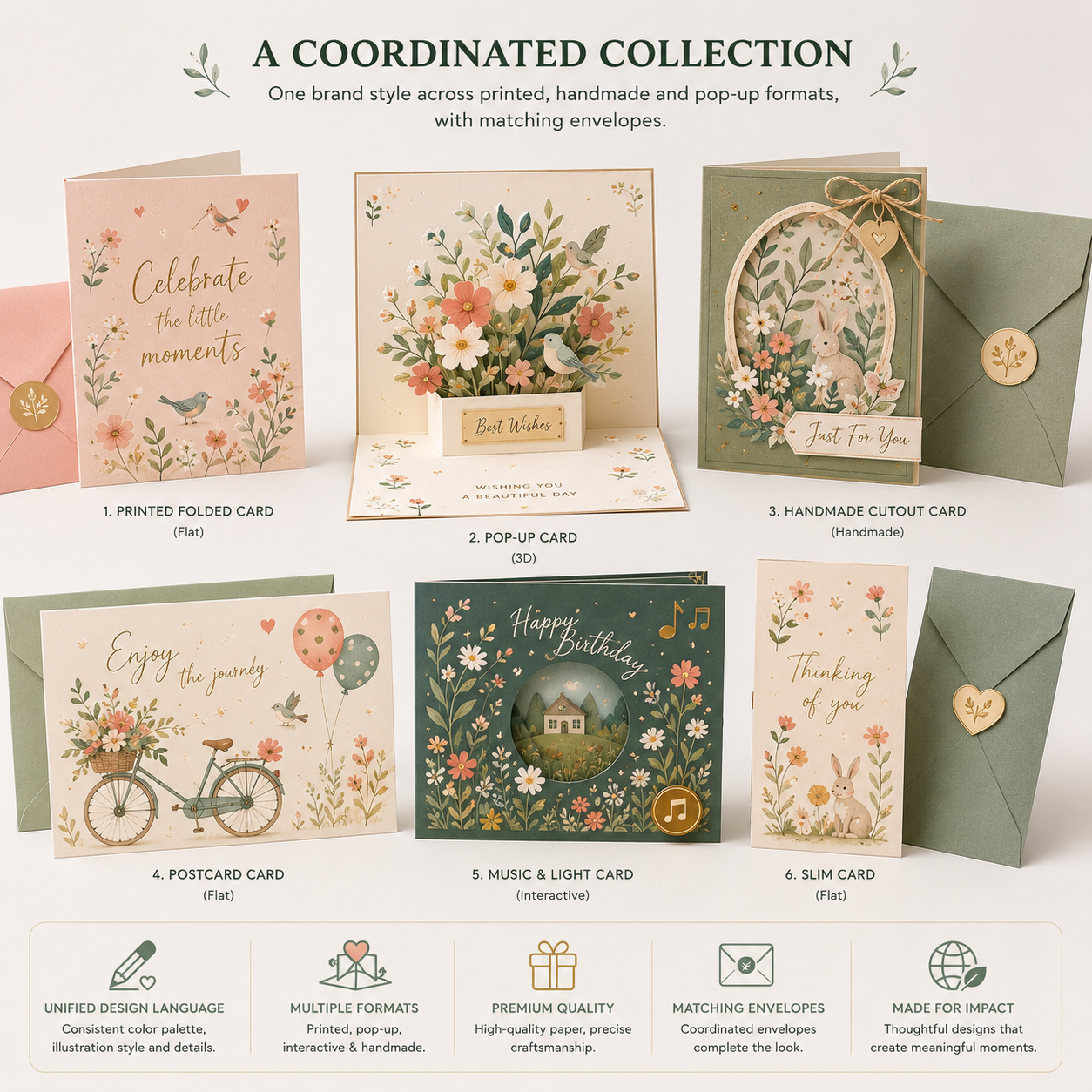
Printed Cards
Printed cards can support broader assortments and accessible price points. Differentiation may come from illustration, typography, paper, foil, embossing or envelope color.
Handmade Cards
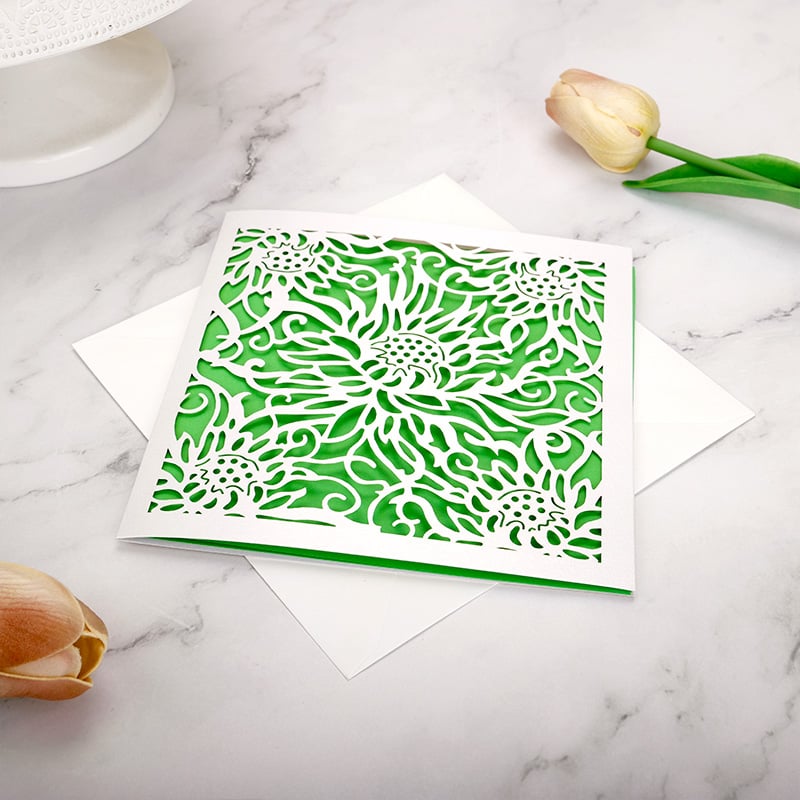
Layered paper, ribbon, fabric and decorative elements can create a crafted premium feel. Assembly standards should define placement and finish across the order.
3D Pop-Up Cards
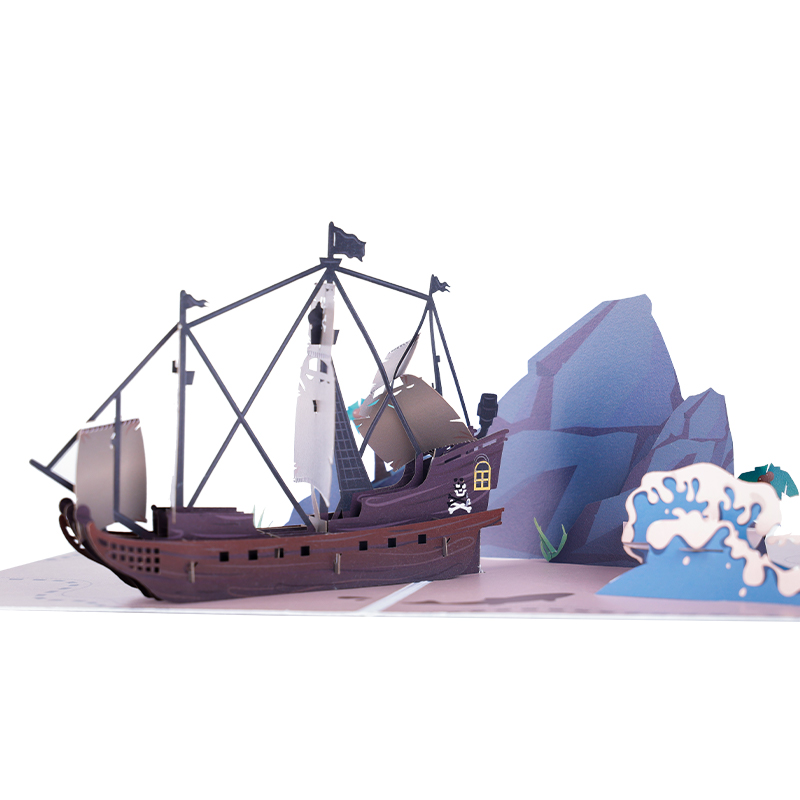
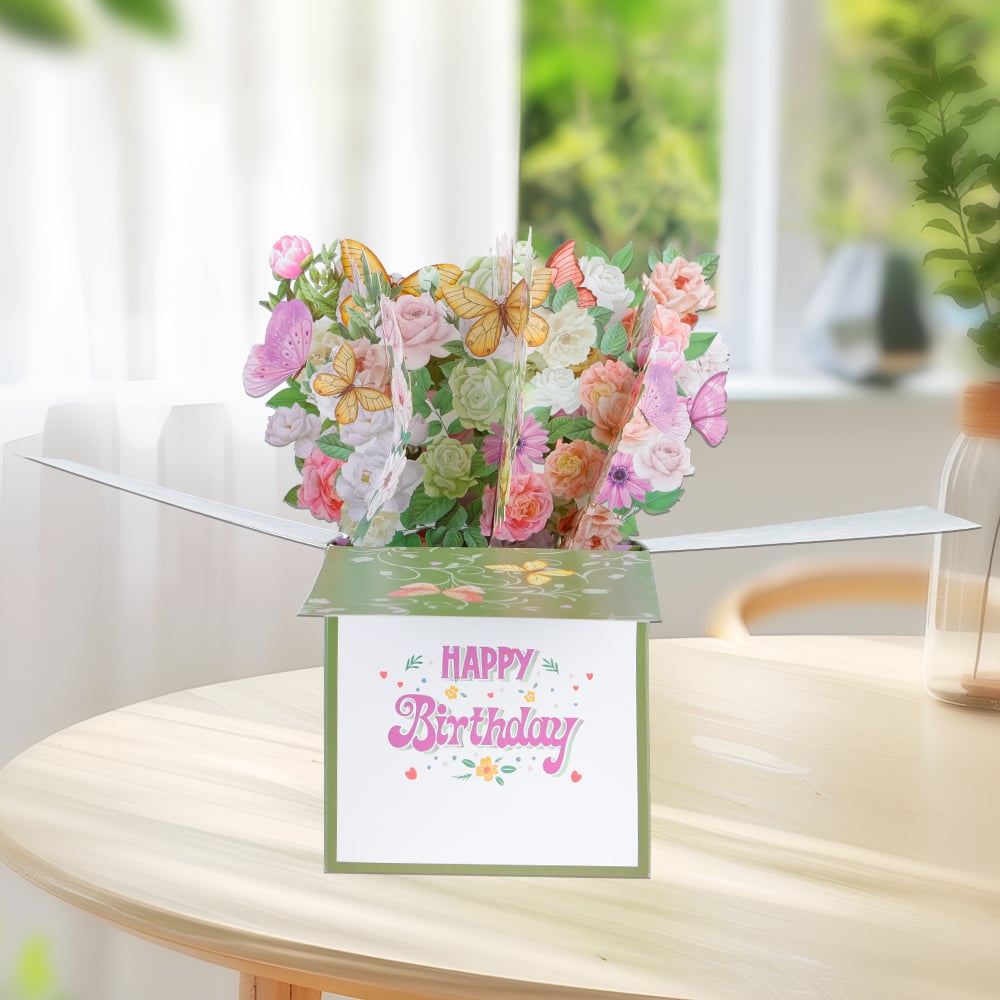
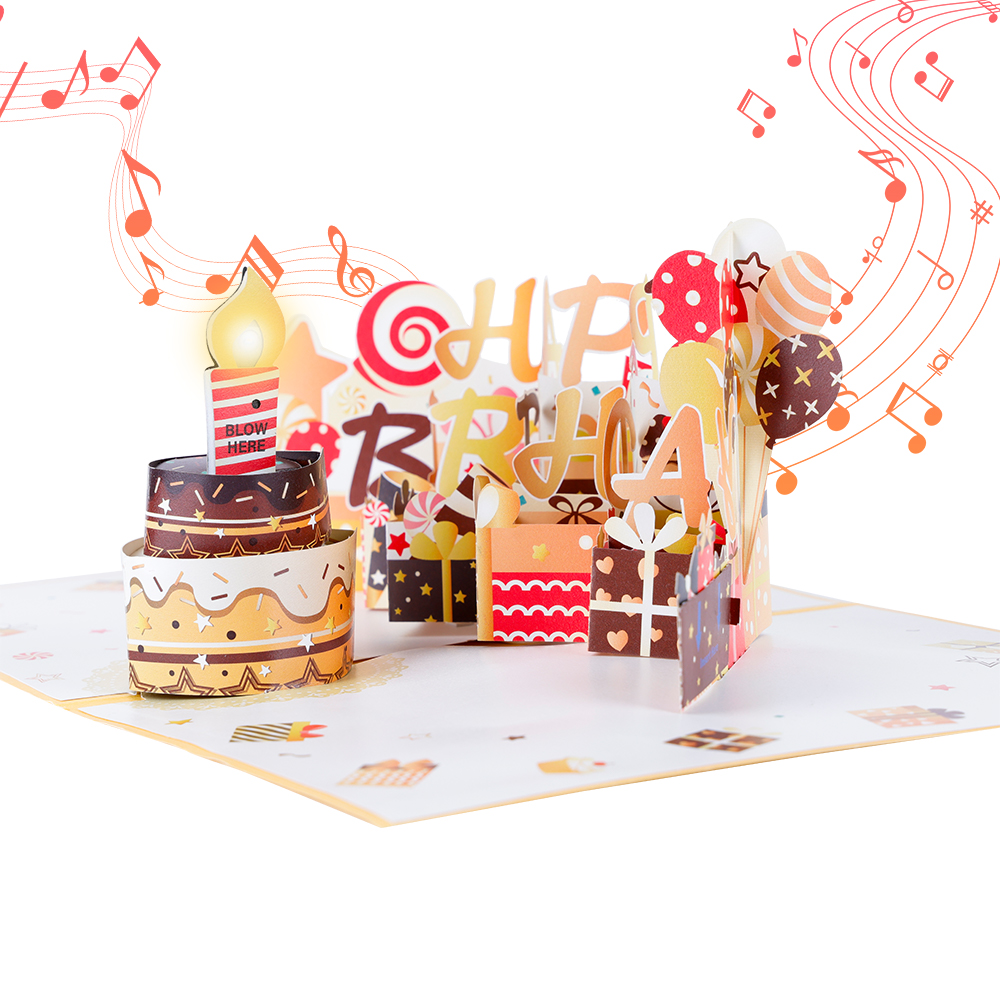
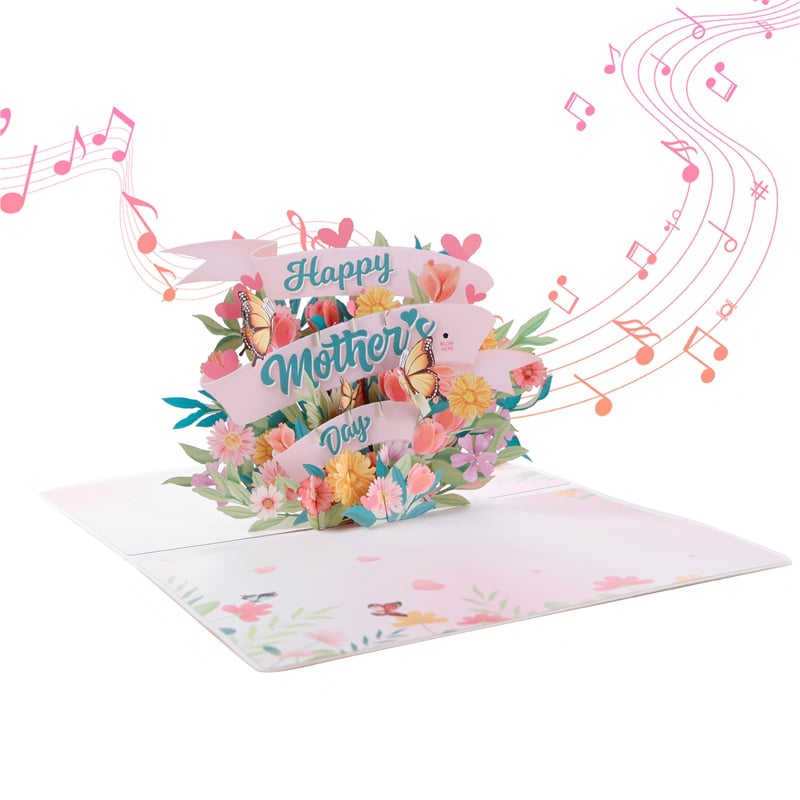
Pop-up formats create a displayable experience and can serve as hero products within a collection. They require structural design, functional sampling and accurate assembly.
Musical and Light-Up Cards
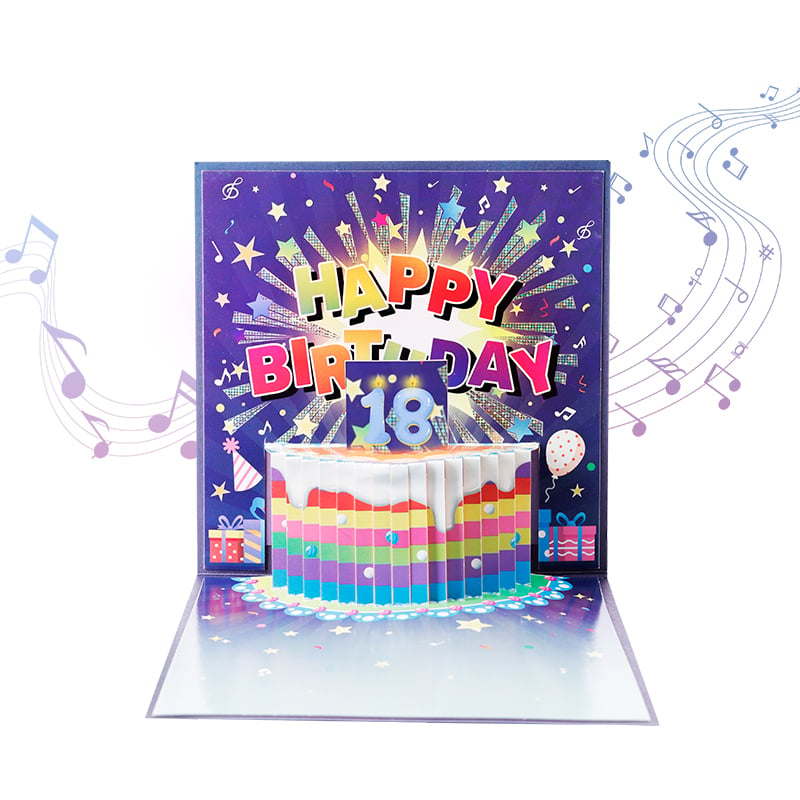
Interactive formats can add sound or visual surprise to selected designs. They need component integration, function testing and suitable packaging, so they are often used selectively rather than across every SKU.
Build a Repeatable Brand Design System
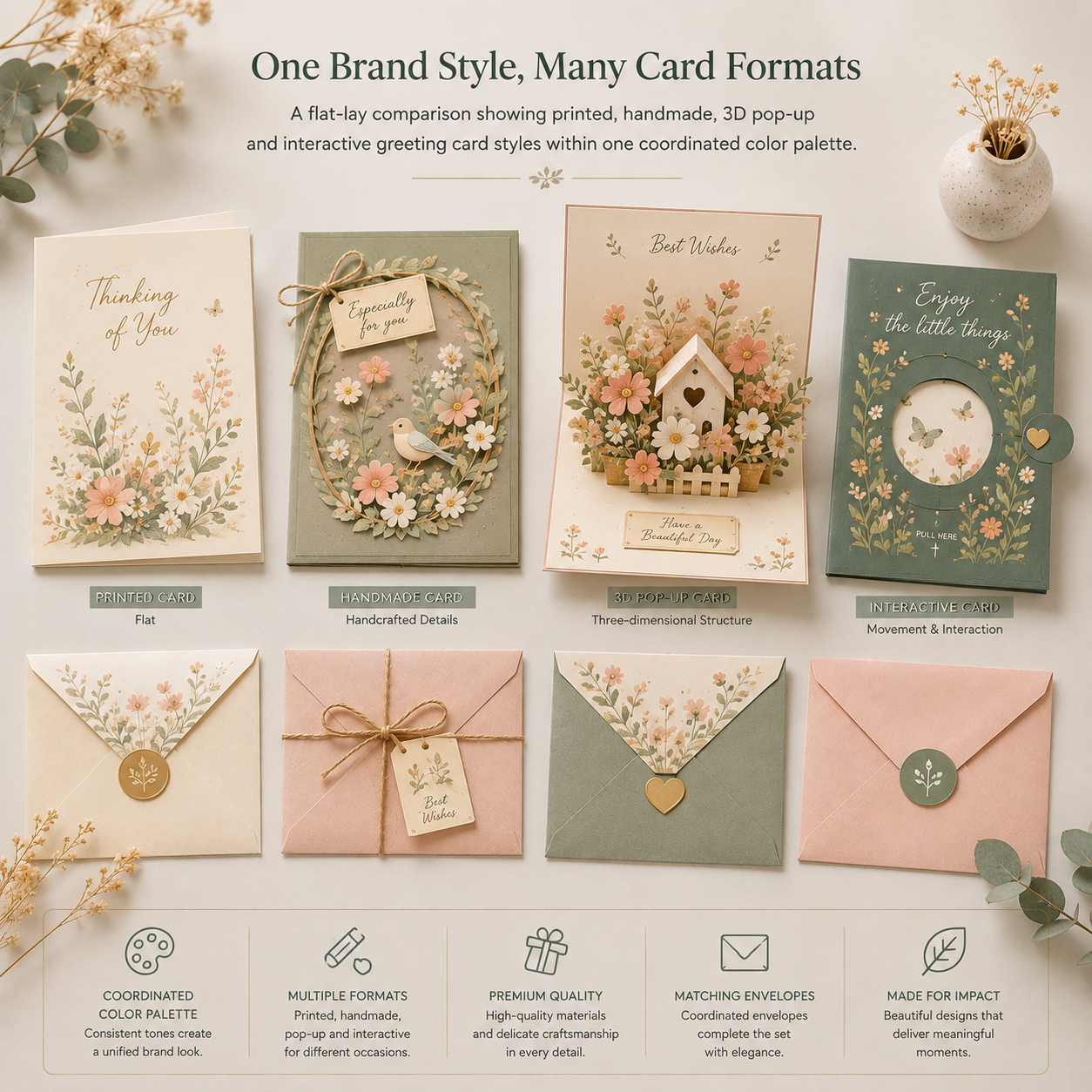
Consistency does not mean every card should look identical. A collection can use shared typography, illustration style, color palette, logo placement, envelope treatment and packaging while allowing each occasion to have its own message and artwork.
Brand logo and required clear space
Typography and message tone
Core and seasonal color palettes
Illustration or photography direction
Standard card sizes and envelope colors
Back-panel information and barcode rules
Packaging layout and product naming
Decide Between OEM and ODM Development
OEM for Buyer-Ready Designs
OEM production is appropriate when a brand supplies completed artwork and defined specifications. The manufacturer reviews manufacturability, prepares samples and produces according to approved materials, finishes and packaging.
ODM for Collection Development Support
ODM support is appropriate when a buyer has a brand direction, target customer or collection plan but needs help developing products. The process may include concept proposals, artwork refinement, product-format recommendations, structural development and packaging options.
Sample the Collection as a System
Individual samples must work, but the products should also look coherent when viewed together. A collection review should compare color, logo use, card dimensions, envelope fit, perceived value, packaging and price tiers across all designs.
Approve a representative material and finish standard
Check messages, spelling and language versions
Compare colors across different papers and processes
Confirm consistent logo and back-panel placement
Review opening, standing or sound functions where relevant
Test how the assortment looks in its retail or shipping package
Plan Quantity and SKU Strategy Carefully
The number of designs affects artwork workload, sampling, production allocation, packaging and inventory risk. Buyers should distinguish between the total collection quantity and the quantity required for each design. A focused launch with clear best-seller hypotheses may be easier to manage than an oversized first assortment.
MOQ and lead time depend on the product format, materials, finishes, module requirements, packaging and number of SKUs. These details should be evaluated for the actual project rather than treated as one fixed number for every greeting card.
Use Packaging to Complete the Brand Experience
Private-label packaging can make the range easier to recognize and sell. Depending on the channel, it may include matching envelopes, protective bags, belly bands, stickers, header cards, barcode labels, gift boxes, assorted sets or display packaging.
E-commerce packaging may prioritize protection and efficient shipping, while physical retail may require clear facing, barcode placement and display compatibility. Packaging decisions should therefore follow the channel strategy established at the beginning.
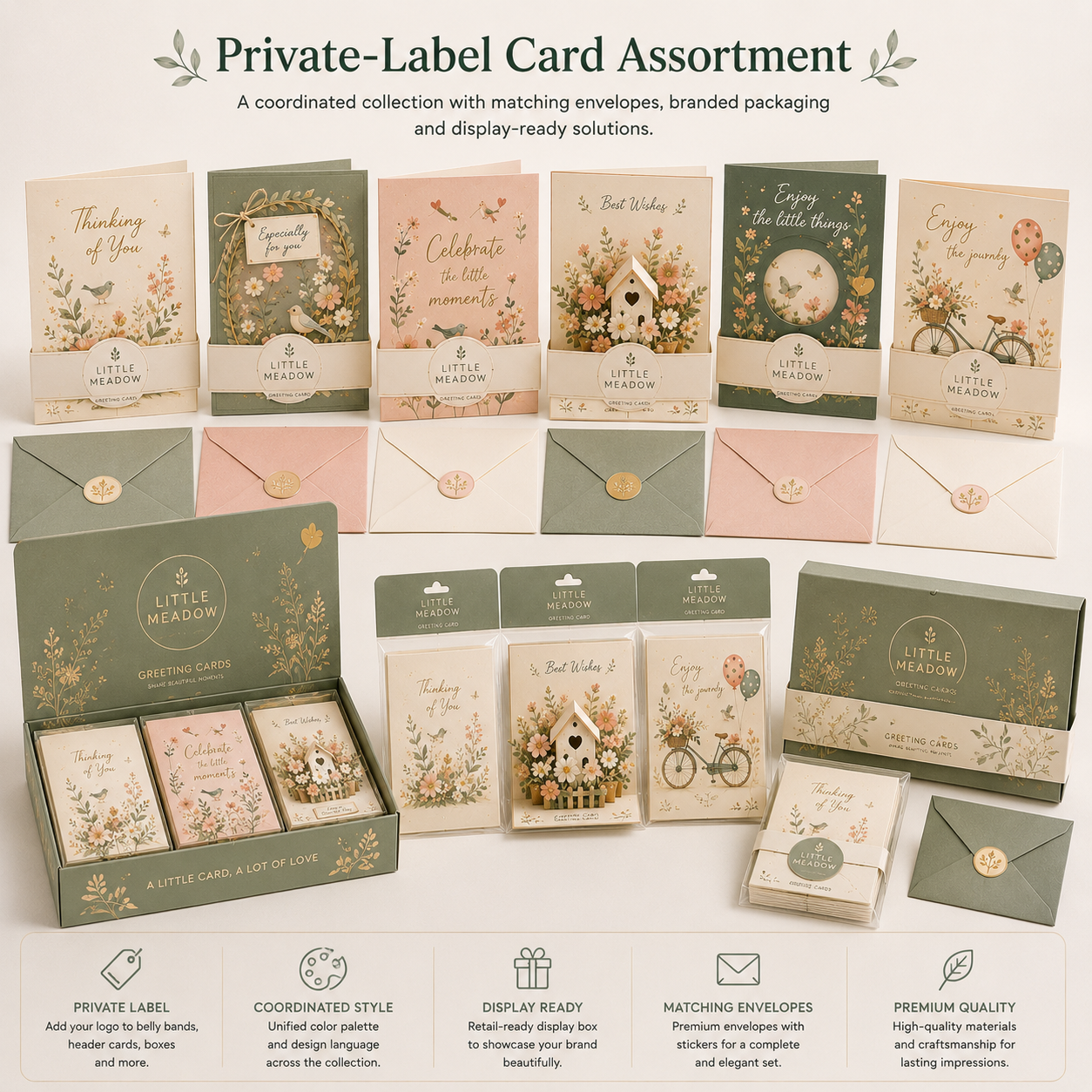
Maintain Quality Across Multiple Designs
A collection may use several papers, decorations and structures, so quality control should combine common brand standards with design-specific inspection points. Shared standards can cover print cleanliness, color range, logo placement, card and envelope matching, barcode accuracy and packaging completeness.
Design-specific checks may cover handmade decoration positions, pop-up operation, sound playback, light function or special finish alignment. Confirmed samples and production references help keep expectations clear across the assortment.
How Winpsheng Supports Private-Label Programs
Winpsheng supports private-label buyers from early product direction through sampling and production. Depending on the project, support can include collection planning input, design feasibility review, artwork development, structural engineering, paper and finish recommendations, interactive function integration, prototype sampling, packaging and mass production.
To start a collection discussion, prepare the brand profile, target customers, sales channels, intended occasions, number of designs, product formats, price targets, estimated quantities, artwork status, packaging requirements and launch schedule. This creates a practical foundation for selecting an OEM or ODM route.
Frequently Asked Questions
What is a private-label greeting card?
It is a greeting card developed or manufactured for sale under the buyer’s own brand, with agreed artwork, product specifications and packaging.
Can one collection combine different card formats?
Yes. Printed, handmade, pop-up and interactive formats can be coordinated within one brand system, subject to feasibility, quantities and development requirements.
Should a new brand start with many designs?
The right number depends on the channel, budget and inventory plan. A focused assortment with clear occasions and price tiers can provide a manageable starting point.
What should a buyer prepare before requesting a quotation?
Useful information includes target market, card types, sizes, number of SKUs, quantity per design, artwork status, materials or finishes, packaging and schedule.
 Hot News
2026-09-15
2026-08-21
2026-08-17
2026-07-15
2026-06-23
2026-06-11
 EN
EN