When brands, importers, retailers, and gift companies begin a custom greeting card project, one of the first decisions is whether they need OEM or ODM manufacturing support.
Both models can turn an idea into a finished product, but they begin at different stages of the development process.
OEM is usually suitable for buyers who already have artwork, specifications, or a developed product concept. ODM is more suitable for buyers who need the manufacturer to participate in product development, structure design, material selection, sampling, and production planning.
Winpsheng supports both OEM and ODM greeting card projects. The right solution depends on how complete the buyer's idea is, how complex the product will be, and how much development support is required.
What Are OEM Greeting Cards?
OEM stands for Original Equipment Manufacturing.
In an OEM greeting card project, the buyer normally provides most of the product direction. This may include artwork, card dimensions, materials, structures, functions, packaging requirements, or an existing reference sample.
The manufacturer's role is to review whether the design can be produced efficiently and then turn the buyer's specifications into a stable finished product.
An OEM project may include:
* Printing customer-provided artwork
* Producing cards in specified sizes and materials
* Adding the buyer's logo or private-label branding
* Following an existing pop-up structure
* Integrating a specified music, light, or recording module
* Producing customized envelopes and packaging
* Managing sampling, mass production, inspection, and delivery
OEM is often the right choice for greeting card brands with an established design team, retailers with approved product specifications, or buyers who already know exactly what they want to produce.
When Is OEM the Better Choice?
OEM may be more suitable when the buyer has:
* Complete artwork files
* Clear card dimensions
* Confirmed paper and finishing requirements
* An existing structural design
* Defined electronic functions
* Final packaging specifications
* An approved target cost
* A clear quantity and delivery schedule
Because the main product direction has already been confirmed, the development process can be more focused.
However, OEM does not mean that the factory simply follows instructions without reviewing them. A professional manufacturer should still check production feasibility, material compatibility, assembly methods, function stability, packaging protection, and quality standards before mass production.
This review helps turn a design file into a product that can be manufactured consistently.
What Are ODM Greeting Cards?
ODM stands for Original Design Manufacturing.
In an ODM project, the manufacturer participates more deeply in product development. The buyer may begin with only a theme, target market, function idea, reference image, or general product direction.
For example, a buyer may ask for:
* A new 3D pop-up card collection for a retail program
* A musical birthday card with a specific sound effect
* A light-up card with LEDs integrated into the paper structure
* A recordable card for personal voice messages
* A handmade premium card for boutique retailers
* A creative paper gift product that does not yet have a finished structure
In these situations, the product must be developed before it can be produced.
ODM therefore requires more than manufacturing capacity. It requires a development team that can work together across design, engineering, sourcing, sampling, production, and quality control.
Why ODM Requires Stronger Factory Capabilities
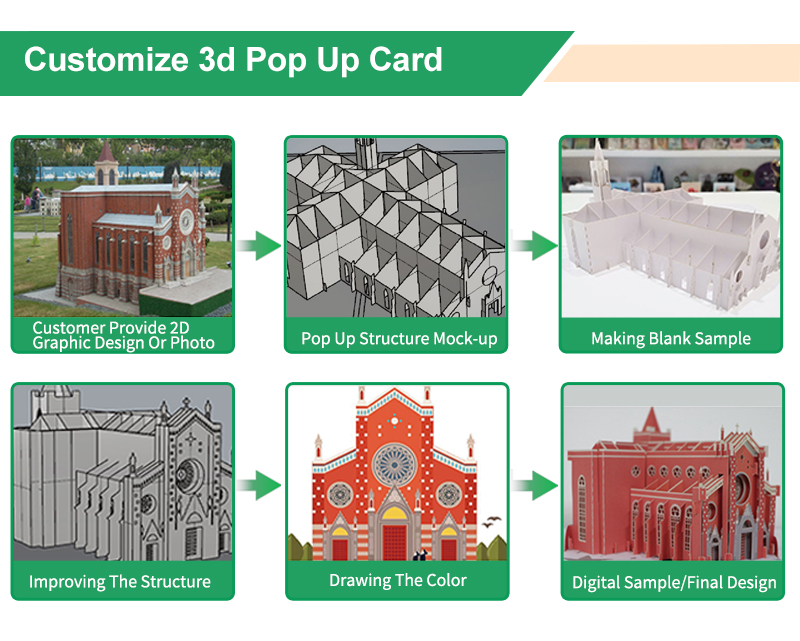
ODM projects test a manufacturer's overall product development ability.
The challenge is not only creating a visually attractive design. The product must also be practical to manufacture, stable during use, suitable for the target market, and controllable in mass production.
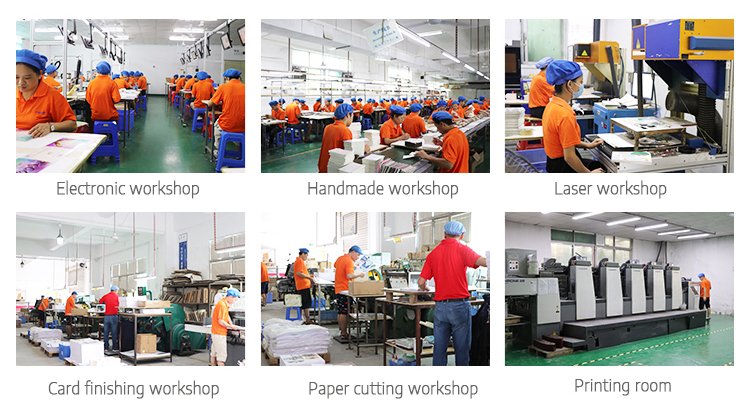
A successful ODM greeting card project may involve several teams working together.
Product and Design Team
The product or design team helps translate the buyer's idea into a clearer product direction.
This may include reviewing the theme, visual style, card format, message area, user interaction, and packaging presentation.
Paper Engineering Team
For 3D pop-up cards, the paper structure must open smoothly, fold correctly, stand securely, and remain stable after repeated use.
The paper engineering team develops and tests the internal structure while balancing creativity with production feasibility.
Electronic Function Team
Musical, light-up, and recordable greeting cards require electronic components to work together with the paper structure.
The team must consider module dimensions, speaker placement, LED position, button location, battery arrangement, circuit stability, and user operation.
Sampling Team
The sampling team turns the design and engineering plan into a physical sample.
During this stage, the team may identify issues that are not obvious in drawings, such as folding resistance, module thickness, sound clarity, glue position, decoration stability, or packaging fit.
Sourcing and Material Team
Paper, decorations, electronic components, envelopes, and packaging materials all affect product quality and cost.
The sourcing team helps identify materials that match the design, budget, quality requirements, and production schedule.
Production Team
The production team reviews how the product will be printed, die-cut, folded, assembled, tested, packed, and inspected in larger quantities.
A sample may look good, but the production method must also be repeatable and manageable during mass production.
Quality Control Team
Quality control standards must be considered during development, not only after production begins.
The QC team may review printing, cutting, folding, pop-up performance, sound, light, recording functions, handmade details, packaging, and final appearance.
This cross-functional collaboration is one of the main reasons ODM projects require stronger factory capabilities.
The Main Difference Between OEM and ODM
The main difference is the starting point of the project.
In an OEM project, the buyer usually provides a developed design, and the manufacturer focuses on production execution and manufacturing optimization.
In an ODM project, the buyer provides a product direction or market need, and the manufacturer helps develop the product solution.
OEM generally involves less original development from the factory.
ODM generally requires deeper cooperation between the buyer and the manufacturer's design, engineering, sampling, sourcing, production, and quality teams.
Neither model is automatically better. The right choice depends on the buyer's internal resources and project requirements.
OEM May Be Right for Your Brand If:
* You already have an internal design team
* Your artwork and specifications are complete
* You have an existing product structure
* Your packaging has already been developed
* You want the factory to focus on production and quality
* You need private-label manufacturing based on approved designs
ODM May Be Right for Your Brand If:
* You have a product idea but not a complete design
* You need help developing a pop-up structure
* You want to add music, light, or recording functions
* You need material and production recommendations
* You want to create a new seasonal collection
* You need support balancing creativity, cost, and manufacturability
* You are entering a new greeting card category
* You do not have a complete internal product development team
Can One Project Include Both OEM and ODM?
Yes. Many custom greeting card projects use a combination of OEM and ODM support.
For example, a buyer may provide the main artwork and brand style, while the manufacturer develops the pop-up structure, selects the electronic module, recommends materials, and improves the packaging.
Another buyer may choose existing product structures from the manufacturer but customize the artwork, message, logo, color, and packaging.
This hybrid approach can be efficient because it allows the buyer to retain control over brand identity while using the manufacturer's development and production experience.
The project does not always need to fit completely into one category. What matters is defining clearly which parts are provided by the buyer and which parts require support from the manufacturer.
How the ODM Development Process Works
Although every project is different, a typical ODM greeting card development process may include the following stages.
1. Project Brief
The buyer shares the product idea, target market, intended use, preferred style, quantity, target price, packaging needs, and expected delivery time.
2. Concept Review
The development team reviews the idea and considers suitable card formats, structures, materials, functions, and production methods.
3. Design and Engineering
The product design, paper structure, electronic functions, handmade details, and packaging are developed or adjusted.
4. Sample Making
A physical sample is produced to confirm appearance, structure, function, material, assembly, and packaging.
5. Testing and Revision
The sample is tested and adjusted. Complex products may require more than one sample round.
6. Production Feasibility Review
Before mass production, the team confirms materials, assembly processes, quality standards, production capacity, packaging, and delivery schedule.
7. Mass Production and Quality Control
The confirmed product enters mass production, with quality checks applied throughout the manufacturing process.
What Buyers Should Prepare for an ODM Project
A complete design is not required, but clear background information helps the development team understand the project.
Useful information includes:
* Target customer
* Sales market
* Product occasion or theme
* Preferred visual style
* Required function
* Target retail price
* Estimated order quantity
* Packaging expectations
* Reference products or inspiration
* Required launch or delivery date
The more clearly the buyer explains the commercial goal, the easier it is for the manufacturer to recommend a practical product solution.
How Winpsheng Supports OEM and ODM Greeting Card Projects
Winpsheng provides one-stop support for both OEM and ODM greeting card projects.
For OEM buyers, we can review artwork and specifications, produce samples, organize materials, manage manufacturing, inspect product quality, customize packaging, and prepare finished products for delivery.
For ODM buyers, our development process can include:
* Product concept discussion
* Design and structure review
* 3D paper engineering
* Music, light, and recording function integration
* Material recommendations
* Sample development
* Production feasibility assessment
* Handmade assembly planning
* Packaging development
* Quality control planning
Our main product categories include:
* Handmade greeting cards
* 3D pop-up greeting cards
* Musical greeting cards
* Light-up greeting cards
* Recordable greeting cards
* Creative paper gift products
By combining product development with manufacturing support, we help buyers move from an early idea or finished design to a product that is ready for production and market launch.
Frequently Asked Questions
What is the difference between OEM and ODM greeting cards?
OEM greeting cards are produced based mainly on the buyer's existing artwork, specifications, or product design. ODM greeting cards involve more development support from the manufacturer, including design, structure, materials, sampling, and production solutions.
Is ODM more difficult than OEM?
ODM usually requires more development work because the manufacturer must help create or complete the product solution. It often involves collaboration between design, engineering, sourcing, sampling, production, and quality control teams.
Can Winpsheng produce greeting cards from our existing designs?
Yes. Winpsheng can support OEM projects based on customer-provided artwork, specifications, structures, functions, and packaging requirements.
Can Winpsheng help develop a product from an initial idea?
Yes. For ODM projects, our team can review the idea and support product design, paper engineering, function integration, material selection, sampling, production planning, and packaging.
Can OEM and ODM services be combined?
Yes. A buyer may provide artwork and branding while the manufacturer develops the structure, function, material solution, or packaging. Many custom greeting card projects use this combined approach.
Which option is better for a private-label brand?
It depends on the brand's internal development resources. Brands with complete designs may prefer OEM, while brands needing product development support may benefit from ODM or a combined OEM/ODM solution.
Conclusion
OEM and ODM are two different ways to develop custom greeting cards.
OEM is suitable for buyers with established designs and clear specifications. ODM is suitable for buyers who need a manufacturing partner to participate in product development.
ODM requires stronger collaboration because a creative idea must be converted into a product that is attractive, functional, manufacturable, consistent, and ready for the market.
At Winpsheng, we support both models. Whether your brand has complete artwork or only an initial product concept, our team can help review the project and recommend a practical path from development to production.
Planning a custom greeting card project? Contact Winpsheng to discuss whether OEM, ODM, or a combined solution is right for your brand.
 Hot News
2026-09-15
2026-08-21
2026-08-17
2026-07-15
2026-06-23
2026-06-11
 EN
EN